FRUGAL CREATIVE LIVING
FRUGAL CREATIVE LIVING
My 10-Minute Grocery Reset: How I Spend Less Before I Even Shop
Over the years, I’ve tried just about every way to cut a grocery bill — strict budgets, detailed meal plans, all of it. And the funny thing is, the method that saves me the most money is also the simplest.
It doesn’t start at the store.
It doesn’t start with coupons.
And it definitely doesn’t start with a brand-new meal plan.
It starts right here, in your kitchen.
Because here’s what most of us do. We open the fridge, see “nothing,” go to the store, and somehow come home with a hundred dollars’ worth of food… and still don’t know what we’re going to eat.
If that sounds familiar, this simple grocery reset can change everything.
This is the exact process I use to turn what I already have into real meals, lower my grocery bill, and make shopping way less stressful.
Tip #1: Start With a Quick Inventory
Most of us are sitting on more food than we think.
Half-used ingredients. Random freezer containers. Things in the cabinets we bought for one specific recipe and never touched again.
Somewhere in your kitchen right now is food you paid good money for that just needs a plan.
So before I shop, I look. Refrigerator. Freezer. Cabinets.
No organizing. No deep cleaning. Just gathering information.
I’ll grab a dry-erase marker and make a quick list of what I see, especially:
Anything already open
Anything that needs to be used soon
Anything that could become a meal
Every single time I do this, I find more food than I thought I had.
And that explains why the grocery store kept getting more of my money than it deserves.
Tip #2: Look for the Stragglers
What always jumps out first are what I call the stragglers.
The half bag of rice.
The two lonely chicken thighs.
The one can of black beans.
These aren’t problems.
They’re clues.
They’re the starting point for your next few meals.
Instead of planning meals first and then shopping, flip the process.
Plan meals around what’s already there.
Tip #3: Build Throw-It-Together Meals
These aren’t fancy, gourmet meals.
These are real-life meals.
Soups, casseroles, stir-fries, skillet meals — the kind of food where it doesn’t matter if you swap ingredients.
Carrots instead of peppers.
Beans instead of chicken.
Rice instead of pasta.
I call these throw-it-together meals because they don’t require perfection.
They just require using what you have.
And eating it. Which is the whole point.
Tip #4: Create a “Use This First” Spot
One small change can make a big difference.
Designate a “use this first” spot in your fridge.
It can be a bin, a basket, or just a shelf.
Anything that’s already open or needs to be eaten soon goes there.
That way, when you open the fridge wondering what to eat, you’re not starting from scratch.
You’re starting with the food that needs you most.
Tip #5: Cook Your Freezer Down in Waves
The freezer isn’t a graveyard where food goes to be forgotten.
Its just the place to keep your food safe until you’re ready to eat it.
Instead of letting food pile up and disappear, I cook my freezer down in waves.
I’ll pull a few items forward and decide those are getting used this week.
And if something in the fridge is about to go bad, freezing it is almost always better than wasting it.
Tip #6: Shop to Complete Meals, Not Start New Ones
Once I know what I already have, only then do I shop.
And I’m not buying new meals.
I’m buying support foods.
Milk. Potatoes. Fresh vegetables. Bread.
Just enough to turn what I already own into complete meals.
This simple shift alone can calm your grocery bill right down.
Tip #7: Keep a Short List of Stretch Foods
Stretch foods are affordable, versatile, and last a long time.
Foods like:
Rice
Pasta
Potatoes
Oats
Eggs
Beans
Frozen vegetables
Whole chickens
Ground meat
These foods can turn into multiple meals. And when you use them flexibly, they make your grocery budget go further.
Tip #8: Plan Ingredient Families, Not Meals
One of my favorite strategies is what I call cook once, eat three times.
You’re not planning meals. You’re planning ingredient families.
A whole chicken becomes:
Dinner
Soup
Tacos or casserole
A pot of beans becomes:
Burritos
Rice and beans
Side dishes
Same food. Different outfits.
Tip #9: Freeze Before Food Goes Bad
If you’re not going to eat something in time, freeze it.
Bread. Rice. Vegetables. Soup. Leftovers.
Freezing turns:
“We didn’t get to it” into “We’ll use it later.”
This habit alone can save hundreds of dollars over time.
Tip #10: Make a “Good Enough” Meal Plan
This is the most important tip.
Your meal plan doesn’t need to be perfect.
It doesn’t need to be pretty.
It just needs to be good enough.
Three to five simple meal ideas based on what you already have.
That’s it.
The goal isn’t perfection.
The goal is less waste and fewer unnecessary grocery trips.
The Big Idea: Use What You’ve Got Before You Shop
This has become my default grocery habit.
Use what you’ve got before you shop.
It makes your kitchen make sense.
It calms your grocery spending.
And it makes everything feel more manageable.
Try This Before Your Next Grocery Trip
Before you shop again, plan just two meals using food you already have.
That’s it.
Just two.
You’ll be surprised how much less you need to buy.
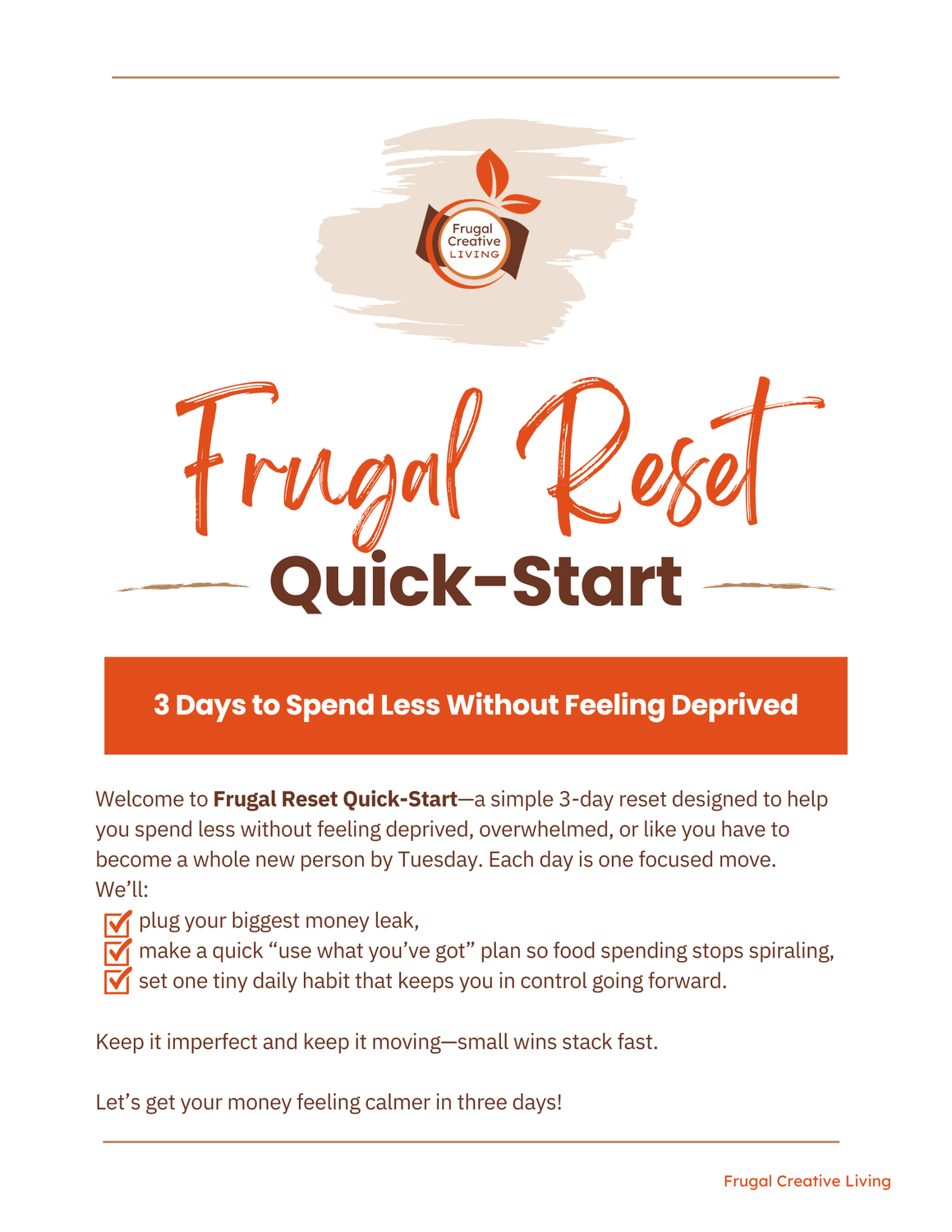
And if you want help putting this into action, you can grab my Free 3-Day Frugal Reset, where I walk you step-by-step through finding your biggest money leaks, using what you already have, and creating a simple system that actually sticks.
Latest Posts